OLMA Srl continuously invests in CNC lathes and machining centers, CAD/CAM software and Industry 4.0 integration to ensure consistent quality, reliable lead times and competitive costs.
This page presents our machine park, indicative capabilities and the tools we use to program, monitor and control our machining processes.
- Quality: traceable processes, dimensional inspections and scheduled maintenance.
- Lead times: optimized setups, reduced downtime and real-time production planning.
- Costs: efficient machining strategies and standardized fixturing solutions.
For details on inspections and certifications, please visit the Quality & Certifications section.
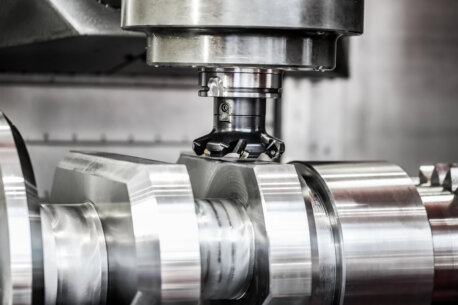
Our CNC turning department includes 2–3 axis lathes equipped with sub-spindles and live tooling, suitable for both bar-fed production and secondary operations.
- Turning diameter: up to approx. 300 mm (indicative, depending on machine model).
- Maximum turning length: up to approx. 500 mm.
- Bar feeding: for medium- and high-volume production.
- Live tooling and C-axis: for drilling and light milling operations in one setup.
- CNC controls: Fanuc / Siemens with advanced machining cycles.
General notes: Feasibility, tolerances, and surface finishes are always verified during the quotation phase.
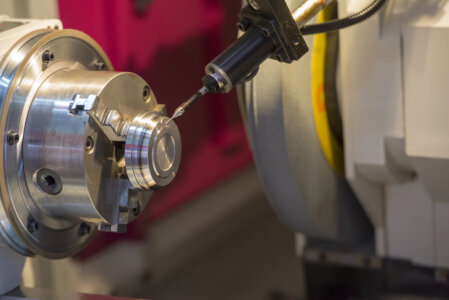
Vertical CNC machining centers with 3- and 4-axis configurations for milling complex components.
- Indicative working travels: X axis up to approx. 800 mm, Y axis approx. 500 mm, Z axis approx. 500 mm.
- Automatic tool changer: 20–30 tool magazine capacity.
- HSM machining and optimized toolpaths: for aluminum alloys and steels.
- Modular fixturing systems and precision vises: reduced setup times.
- Workpiece and tool probes: fast zero-setting and tool wear monitoring.
Note: all values are indicative and are always confirmed during technical evaluation of the component.
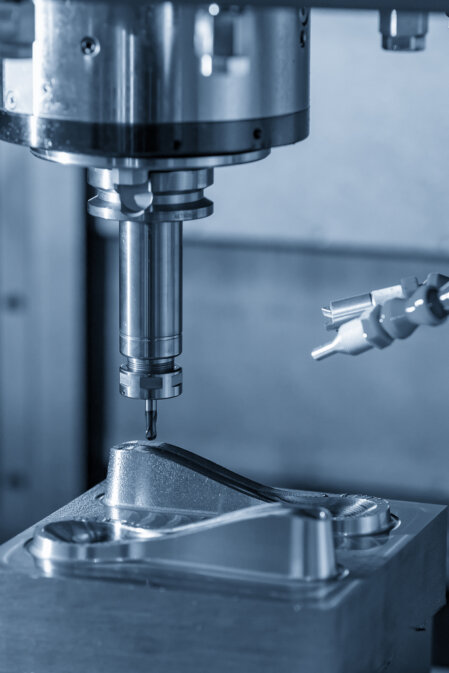
We import STEP, IGES, DXF/DWG and PDF files and program machining operations using CAD/CAM software with dedicated post-processors tailored to our CNC controls.
- Toolpath simulation: collision prevention and cycle time verification.
- Tool libraries and machining strategies: standardized to ensure consistency between prototypes and series production.
- Quality integration: shared control plans and tool data linked to machining programs.
Please refer to the Quality & Certifications page for detailed information on metrology and traceability related to machining programs.
We select branded cutting tools and modular fixturing systems to ensure repeatability and stable cycle times.
- Tool holders and presetting: length control and balancing.
- Probing systems and periodic calibration: reliable zero-setting and compensation.
- Scheduled maintenance: maintenance plans for machines and peripherals (coolant systems, filters).
- Organized tool magazines: reduced waiting times and faster tool changes.
These practices result in consistent quality and reduced scrap rates.
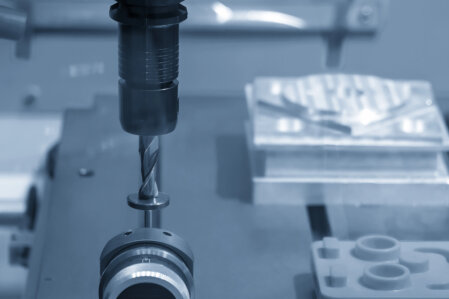
Upload your technical files (STEP, DWG, PDF) to receive a fast response with lead times and costs.